
Over the last few months, I have come across a few cases in Tamil Nadu that genuinely disturbed me.
An elderly gentleman in his seventies walked into a Sub-Registrar Office with a prospective buyer to complete the sale of land his family had owned since the 1990s. The plot had never been sold, never mortgaged — simply held, untouched, for three decades.
Instead of completing the registration, he was told the property had already been registered in someone else's name a few months earlier.
According to the complaint, the person who executed that earlier sale carried the same name as the real owner — but a different photograph and different identity documents. The buyer in that fraudulent transaction was an NRI who had purchased through his parents, in good faith, with registered documents in hand and full payment made. He was cheated just as thoroughly as the owner was.
The matter is now before the police and the courts. And it isn't an isolated case — I have come across a few more incidents with strikingly similar facts. I don't know how widespread this pattern is. But the method is clear enough: identify a vacant plot with an absent owner, forge documents and an identity around the name on a decades-old deed, and sell the land to someone who has no reason to suspect anything.
Why legacy holdings are the target
Lakhs of families bought land in the 1980s and 1990s, filed the original sale deed away in a cupboard, and assumed ownership was settled forever. That assumption was reasonable then. It may not be anymore.
Properties registered before the digital era carry a specific vulnerability: identity verification at the time relied on physical documents, old photographs, and local witnesses. There was no biometric link, no centralized identity trail. If your ownership record has never been touched since, the registration system has no modern way of knowing what you look like — only what your name is. And a name can be copied.
We talk constantly in real estate about title, valuation, approvals, and litigation. Perhaps we should also be talking about identity — because in these cases, title was never the weak point. The weak point was that nobody could verify who was standing at the counter.
What struck me most
There was more than one victim here. The landowner lost his peace of mind and now faces years of litigation over land that was always his. The buyer's family lost their money and their trust. Both sides acted honestly. The only people who benefited are the ones who allegedly orchestrated the fraud — and who, so far, remain untraceable.
If you hold land that has sat untouched for years
Land is, for most families, the largest investment of their lives. It deserves an hour of your time this month:
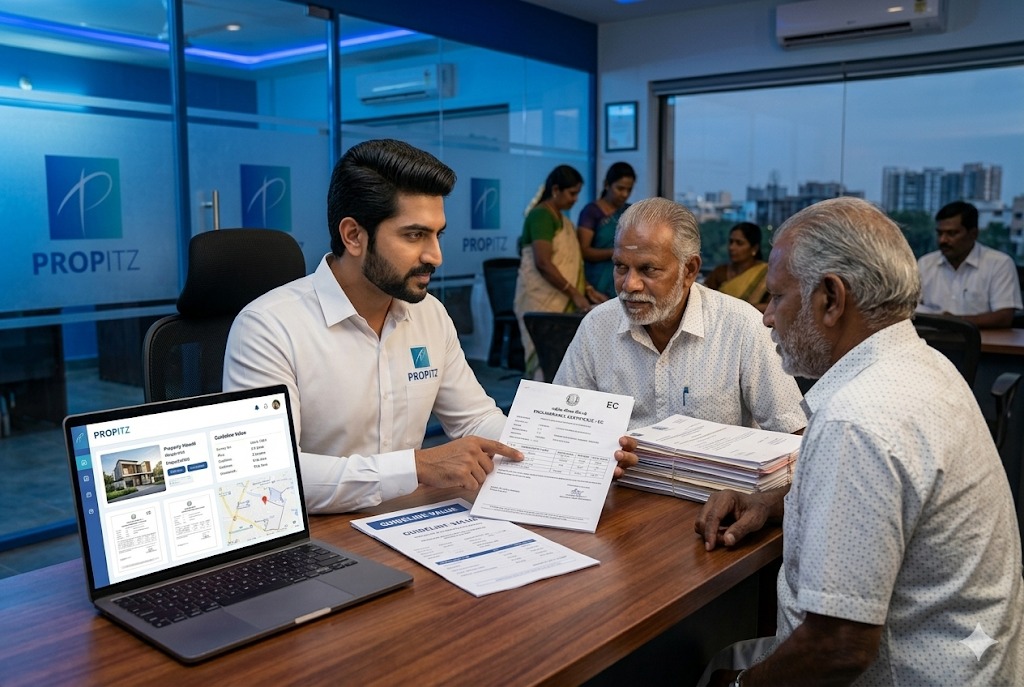
- Pull your Encumbrance Certificate (EC). Available online in most states in minutes. It will show whether any transaction or lien has been registered against your survey number without your knowledge.
- Verify your Patta / revenue records. Confirm the record still reflects your name and correct extent.
- Link your Aadhaar to the property records. This is the single most important step. A record linked to a verified modern identity is far harder to impersonate than a 30-year-old paper deed.
- Update your mobile number wherever the registry or revenue portal allows it, so any attempted transaction triggers an alert to you — not to a stranger.
- Visit the land periodically, or ask someone local to. Impersonators depend on absence.
A small amount of preventive effort today can spare a family years of litigation tomorrow.
I work on land diligence and project delivery in Tamil Nadu, which is how these cases reached me.
To the property lawyers, registration officials, and fellow real estate professionals here — have you encountered impersonation cases like this? What change to the registration process would make this fraud meaningfully harder?
Property ownership should not become uncertain simply because a family chose to preserve an asset for the next generation.
Holding land that has sat untouched for years?
We can help you pull the EC, check the Patta and revenue records, and bring in an advocate if something looks wrong.
This article is informational and does not constitute legal, tax or financial advice. PropITZ facilitates guidance and coordination and connects users with independent professionals.